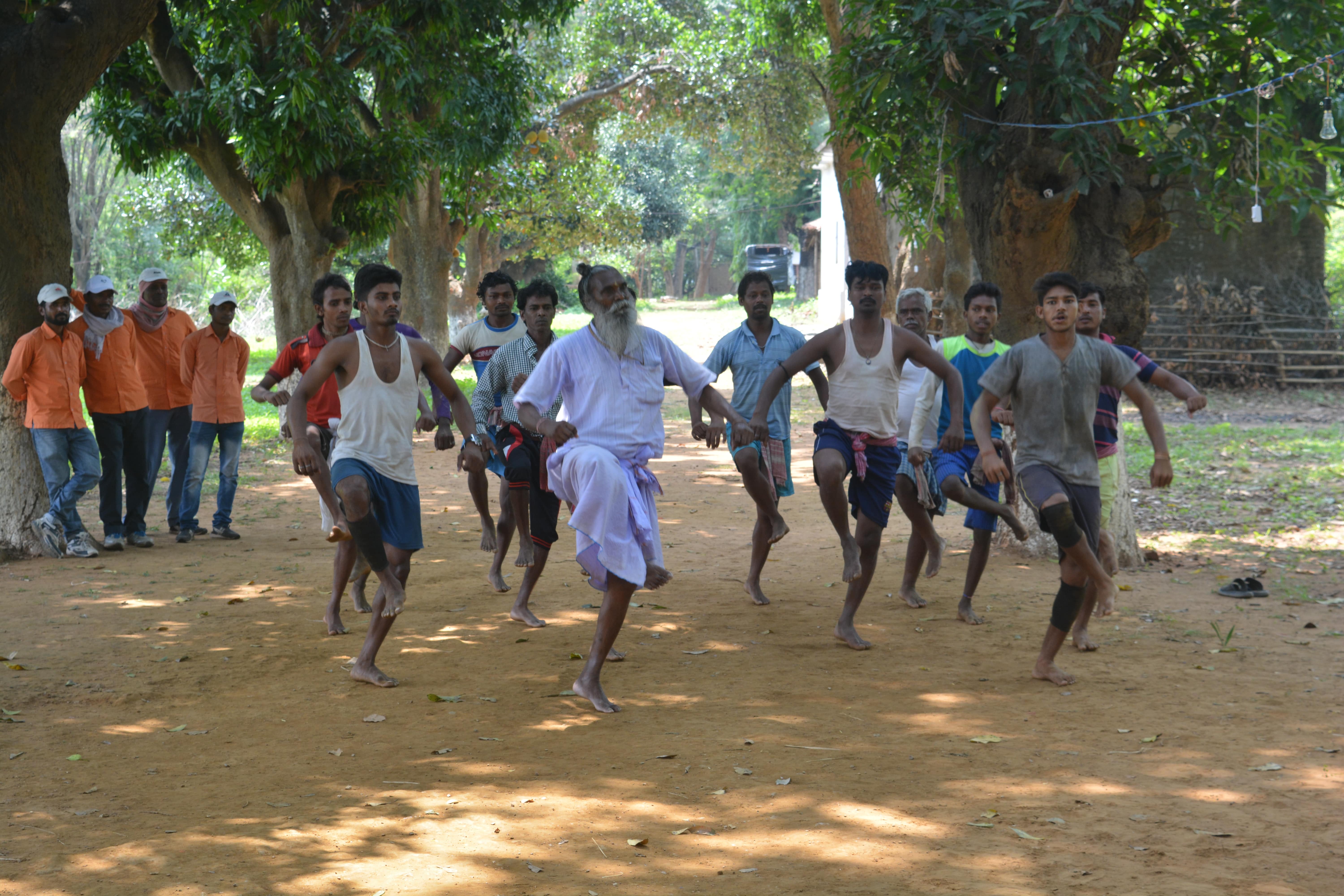
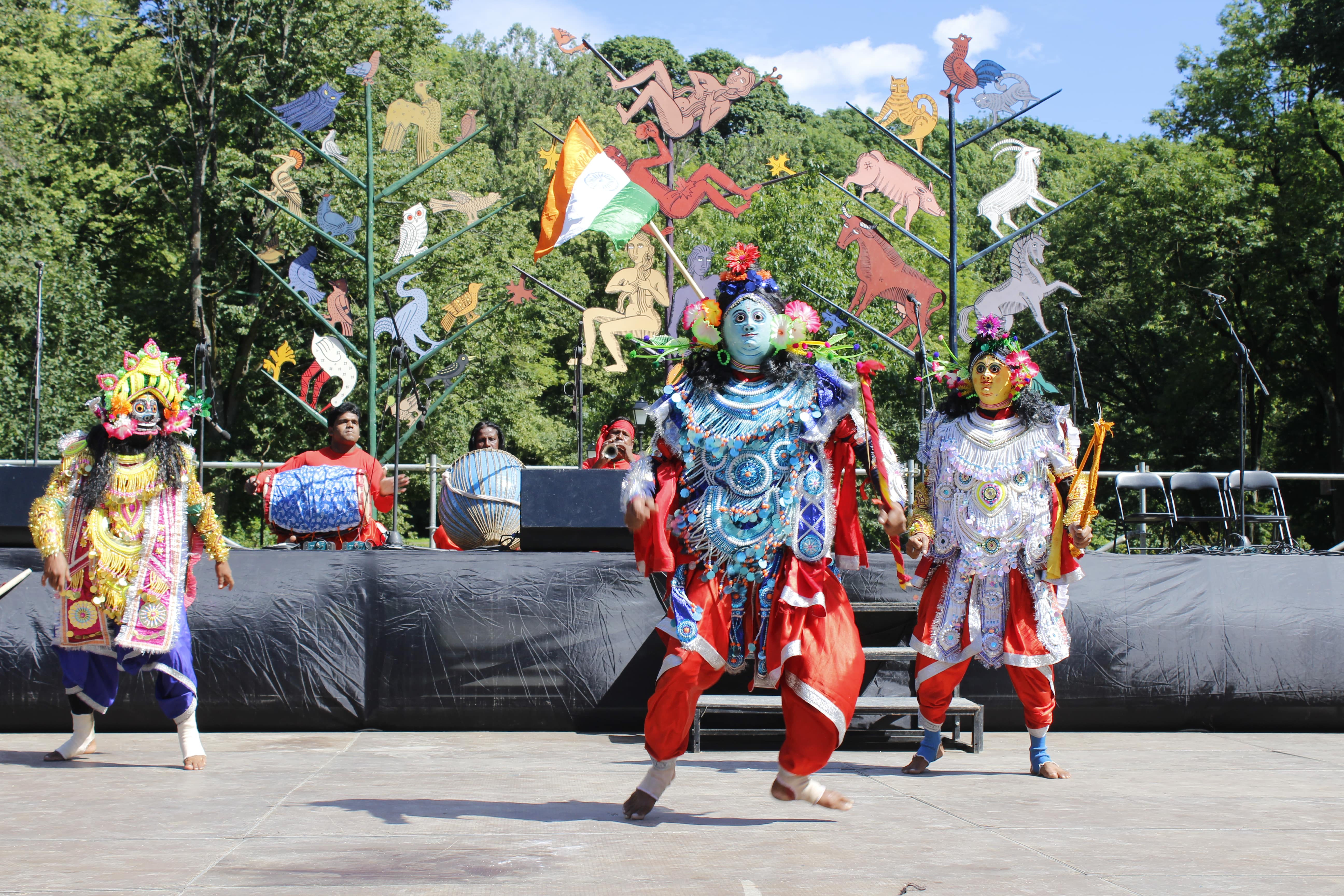
Rooted in the Chotanagpur Plateau, Chhau reflects the landscape, resilience, and worldviews of eastern India’s Indigenous communities. Its martial vocabulary, rhythmic footwork, and narrative strength draw from local combat practices, agrarian cycles, and village rituals. Today, Chhau remains a vibrant living heritage, sustained across Jharkhand, West Bengal, and Odisha by dedicated communities who continue to train, perform, and transmit the tradition across generations.
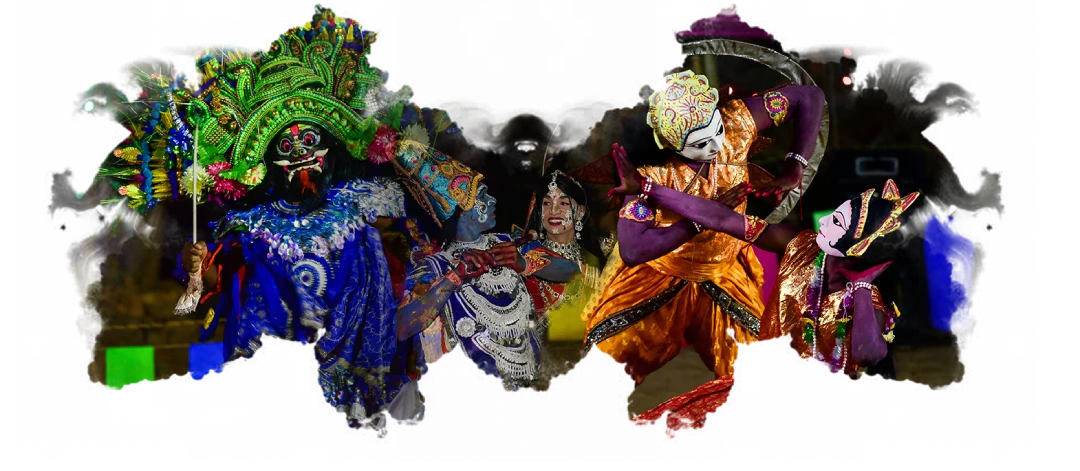
Seraikela Chhau – Seraikela Chhau, nurtured under the patronage of Maharaja Aditya Pratap Singh Deo, Kumar Bijoy Pratap Singh Deo, and Rajkumar Suddhendra Narayan Singh Deo, follows the guiding principles of Natyashastra and blends martial precision with semi-classical grace. Performed with small, expressive masks depicting Navrasas, it portrays divine and mythic characters, sustained today by a vibrant community of practitioners based in Seraikela Kharsawan of Jharkhand.
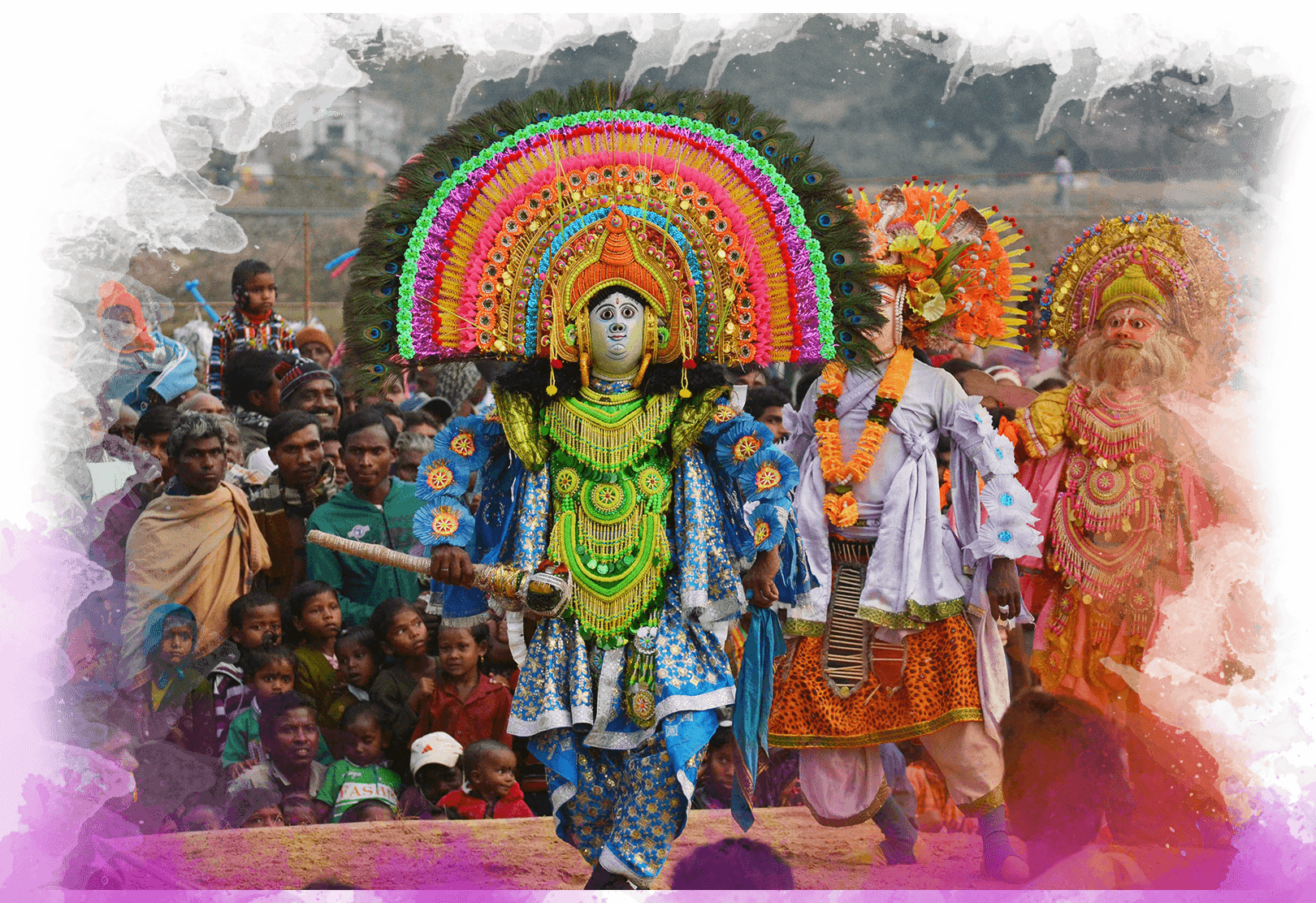
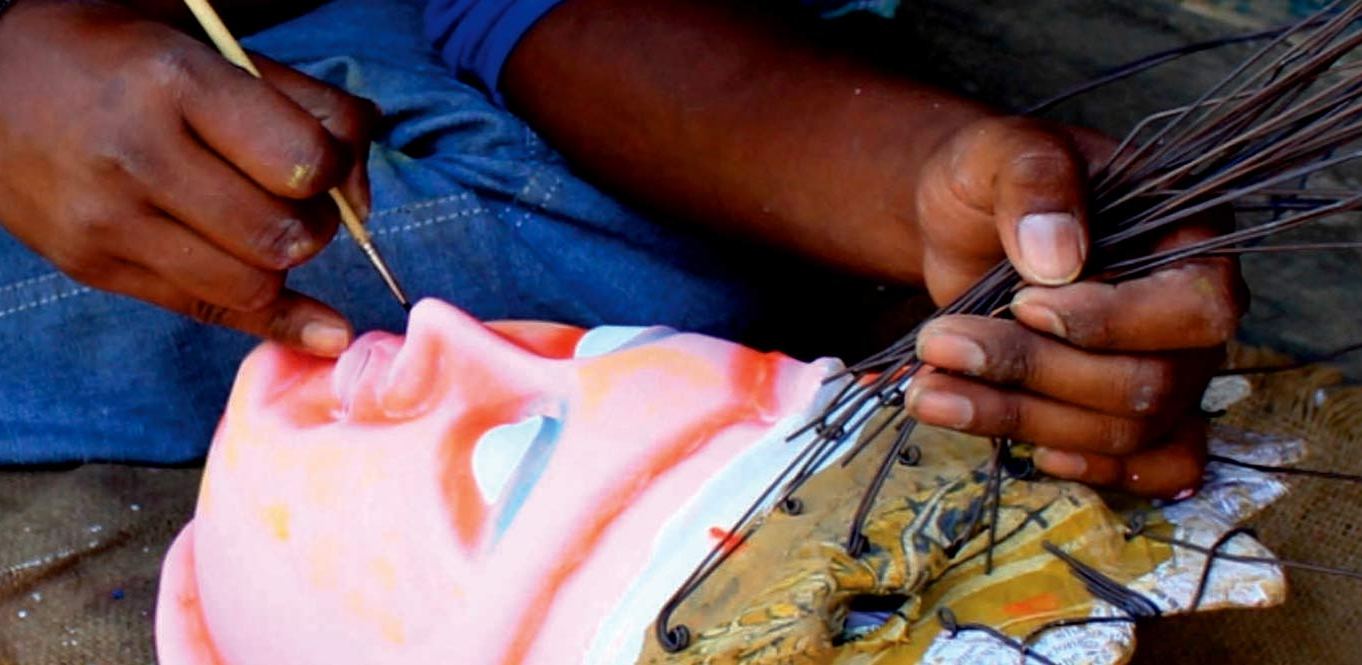
Manbhum Chhau – Manbhum Chhau, also known as Purulia Chhau in West Bengal, features large masks, vibrant costumes, and high-energy acrobatics that depict episodes from the Ramayana, Mahabharata, and local legends. With expressions carried through dynamic movement, it remains a bold living heritage. The magnificent masks of Manbhum Chhau, crafted by artists of Charida village, bring each character—gods, demons, heroes—to life. This 150-year-old craft tradition, which began under the patronage of King Madan Mohan Singh Deo of Baghmundi, continues today, blending devotion, artistry, and identity.
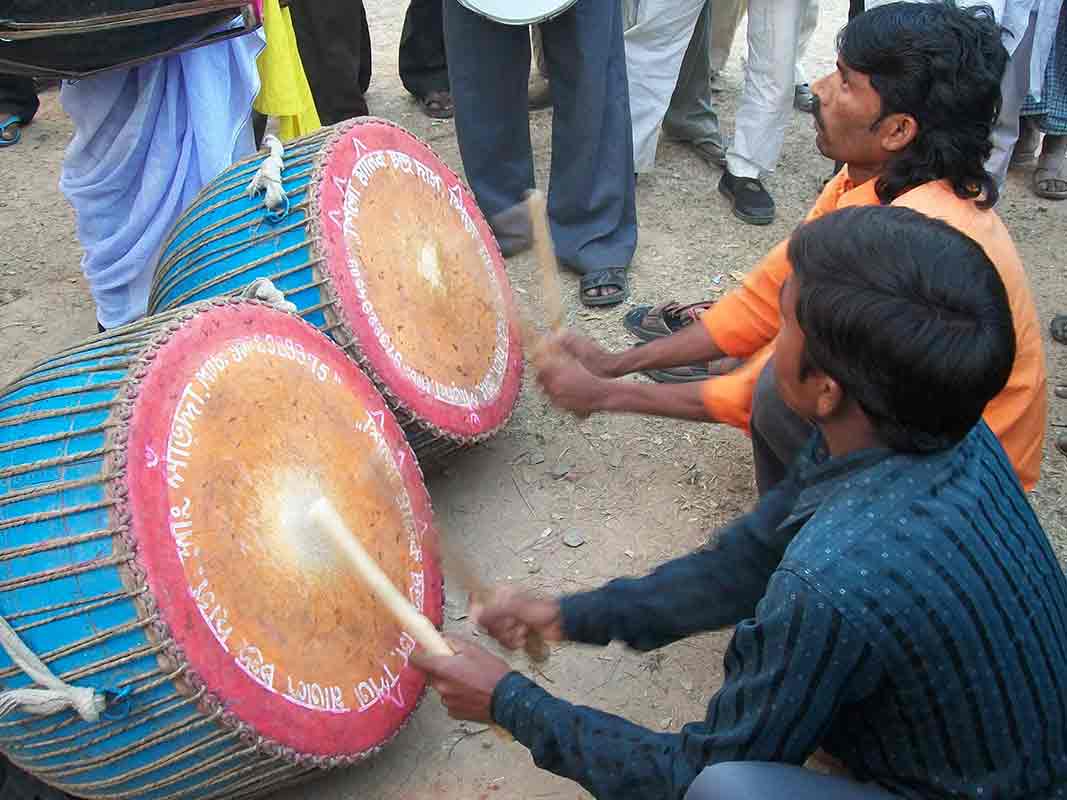
Mayurbhanj Chhau – Mayurbhanj Chhau Dance is a traditional martial dance–drama from Odisha, performed without masks, allowing dancers to convey emotions through expressive faces along with vigorous, athletic movements. It blends martial techniques, acrobatics, and folk traditions to depict themes from mythology, nature, and everyday life. A key form is Rookmar Nacha (also known as Pharikhanda Khele), a dynamic sword-and-shield mock combat highlighting attack and defence, bravery, and discipline. Rooted in the aesthetic principles of the Natyashastra, Mayurbhanj Chhau integrates Angika Bhava (bodily expression), Sattvika Bhava (inner emotion), and Aharya Bhava (costume, makeup, and props), with character-wise makeup enhancing dramatic impact. Its distinctly martial music, led by powerful drum rhythms—especially the deep, resonant kettle-drum—energises and drives the dancers’ movements.
Kharsawan Chhau – Closely aligned with the painted-body aesthetic of Mayurbhanj, Kharsawan Chhau is deeply rooted in tribal traditions. Performed without masks, it relies on expressive facial work, vivid body paint, and movements drawn from hunting, farming, and ritual life. Raw, earthy, and community-centered, this powerful form continues to thrive as a living heritage of Jharkhand.
Mayurbhanj and Kharsawan Chhau are characterized by powerful, maskless styles, where intricate body and facial paintings replace masks to convey character and emotion. Here, the painted body itself becomes the costume, transforming the dancer into the living image of the narrative.