
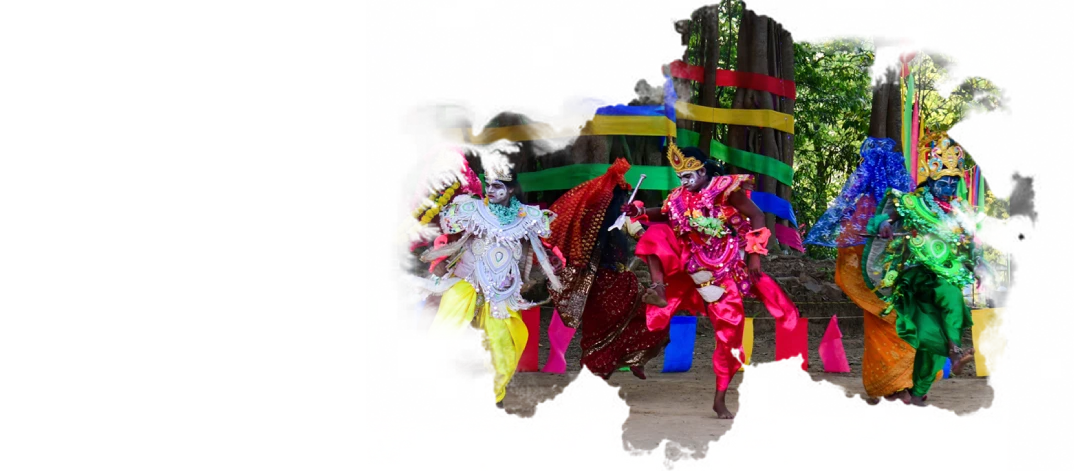
Dhuli-Khel depicts Krishna and his companions playing in a dusty open field, capturing a joyous moment from his childhood. Krishna and the cowherd boys laugh, run, and play together, kicking up clouds of dust as they frolic freely. The scene reflects the innocence and playful spirit of Krishna’s early life, a beloved theme in Indian […] read more
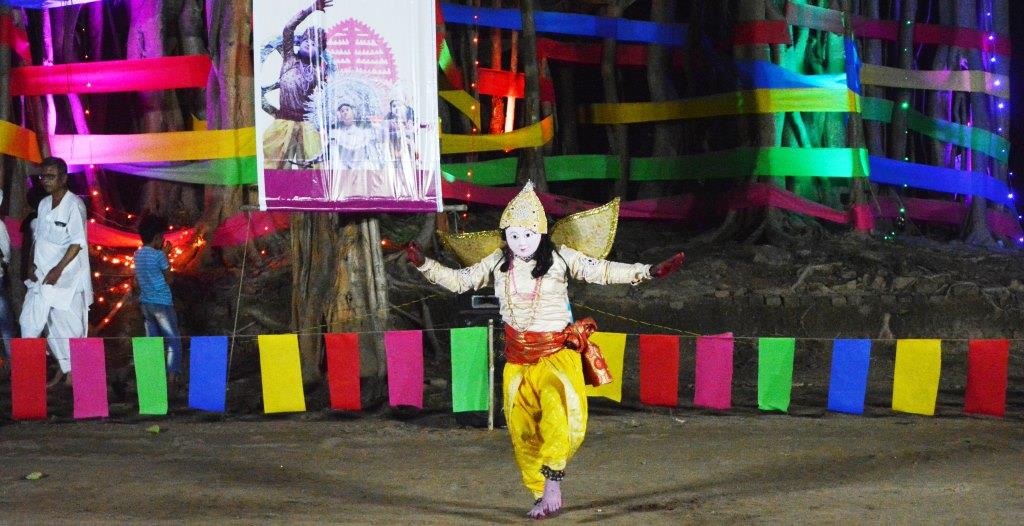
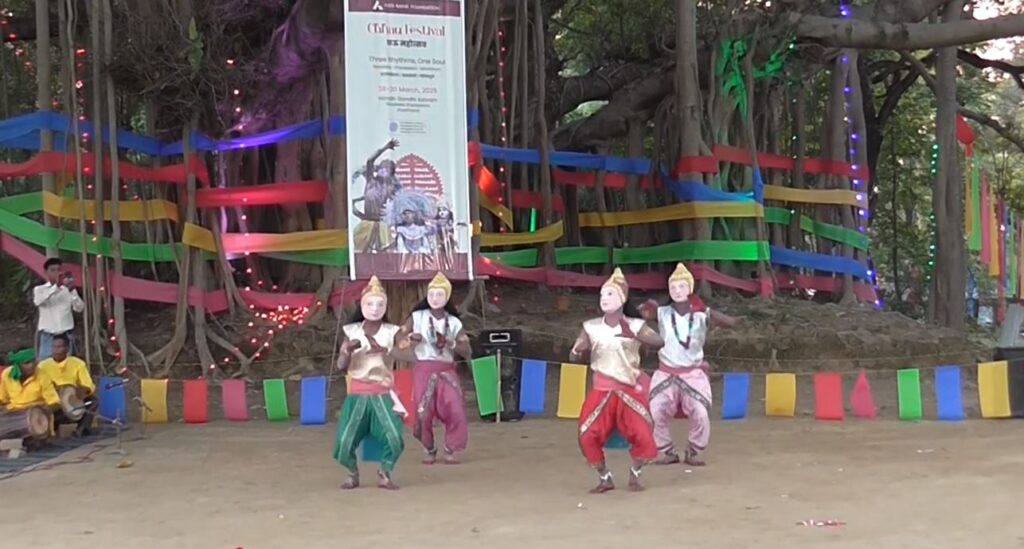
Butterfly (Prajapati) is a symbolic piece in Seraikela Chhau inspired by the butterfly.Through soft, fluttering movements and controlled grace, it reflects the beauty of transformation.The dance embodies themes of love, life, and regeneration, capturing nature’s delicate rhythm. Group Name – Shri Kedar Art Centre, Seraikela read more
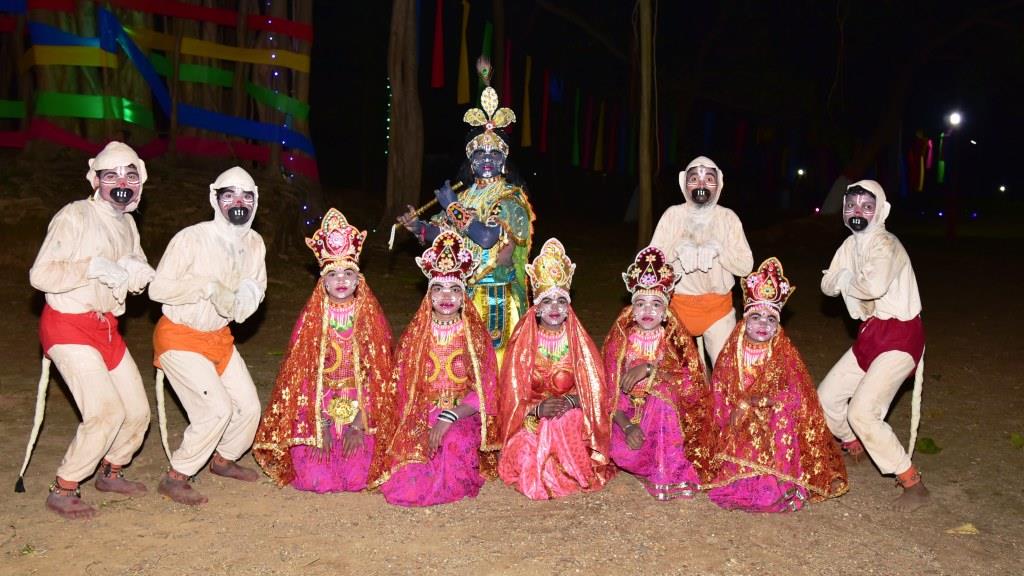
After the victory of Lanka, when Lord Ram returned home with Sita Mata, a ceremonial offering was organized. During the distribution, Lord Ram and Sita Mata were offering the prasad with their own hands. At that moment, some sages were sitting deep in thought. Lord Ram asked them what they were thinking about. The sages, […] read more
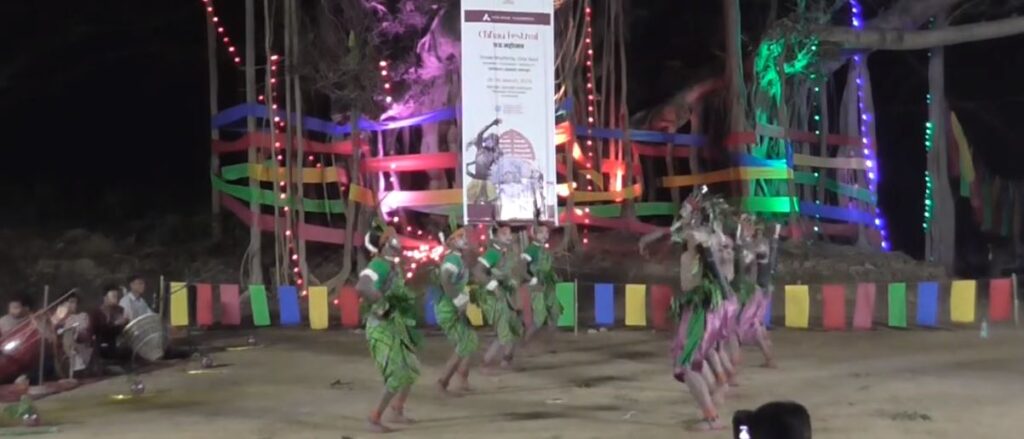
This dance is based on the tribal tradition, where the tribal community goes hunting together. After facing initial failure, when the hunters finally succeed in their hunt, they burst into joyous celebration through dance. Their wives also join them in this moment of happiness, and the dance reaches a mesmerizing and ecstatic level of expression. […] read more
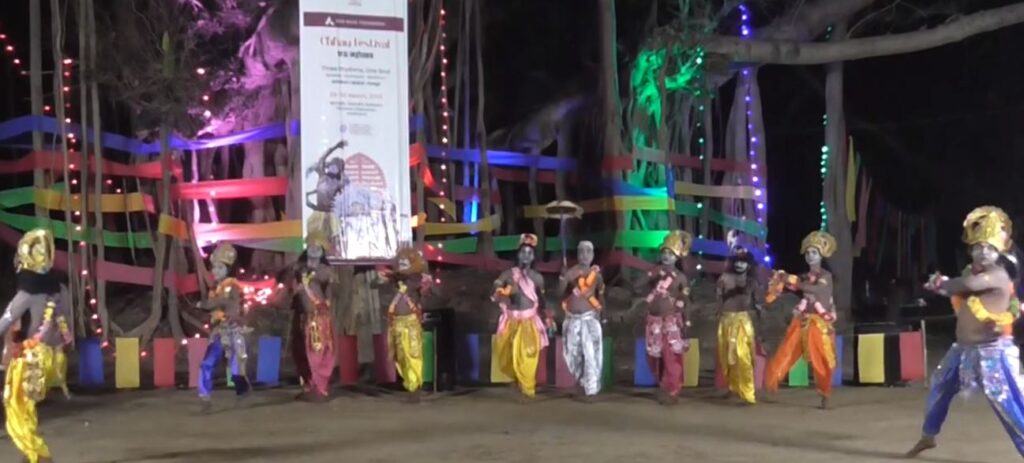
Dashavatar refers to the ten incarnations of Lord Vishnu, each taken to restore dharma and maintain cosmic balance. From Matsya, Kurma, and Varaha, who saved the Vedas, supported the churning of the ocean, and rescued the Earth, to Narasimha and Vamana, who destroyed tyranny and restored order, Vishnu appeared in many forms. As Parashurama he […] read more
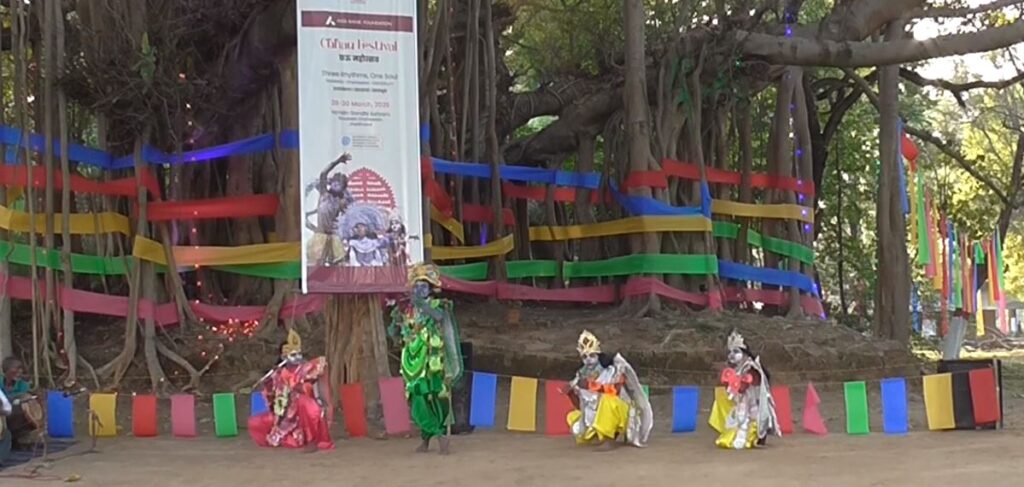
This dance performance is premised on Krishna’s Rasleela, a divine and artistic tradition that originated from the playful and enchanting dance of Lord Krishna. As Krishna Ji played the flute on the banks of the Yamuna river, he called out to Radha, who, mesmerized by the melody, would rush to join him in dance. Their […] read more
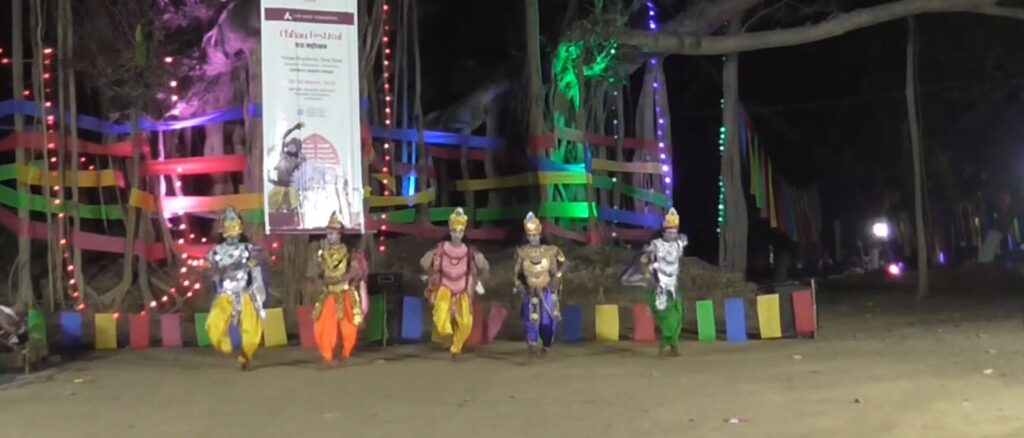
In this performance, Krishna, while playing with the Gopis, suddenly disappears. The Gopis call out to him, “O Lord Narayan, where have you gone?” Krishna, when he is with them, they do not bind him with words, but the moment he disappears, they start calling him. When Krishna, in the form of a child, comes […] read more
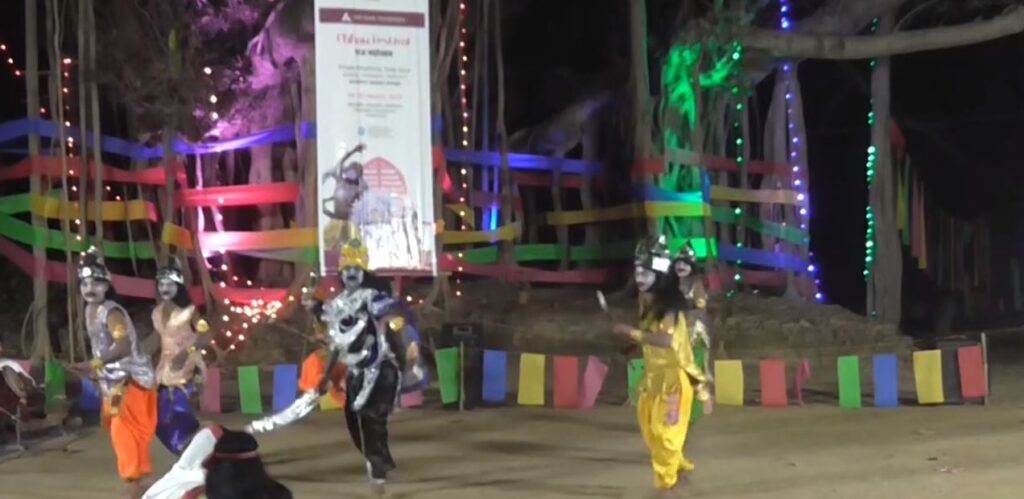
The performance narrates the birth of Krishna. It was foretold that Devaki’s eighth son would be born. When the child was born, the prison gates where Vasudeva and Devaki were held opened on their own, and the chains binding Vasudeva were broken. The guards fell into deep sleep, and Vasudeva carried the newborn child out. […] read more
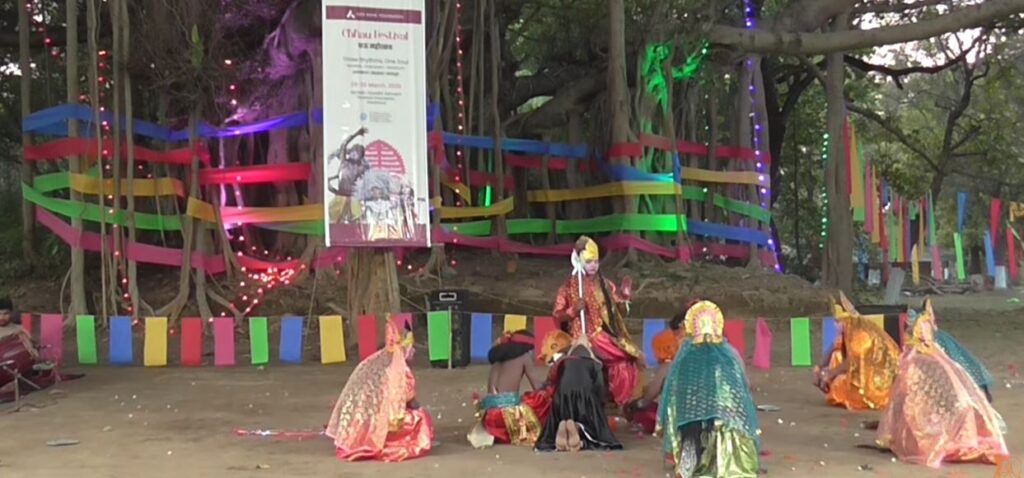
This dance performance brings to life the legendary battle of Mahishasura Badh, the slaying of the mighty demon Mahishasura by Goddess Durga. Rooted in ancient mythology, the story symbolizes the triumph of good over evil, divine justice, and the power of feminine energy. Mahishasura, through severe penance, gained a boon from Lord Shiva, making him […] read more
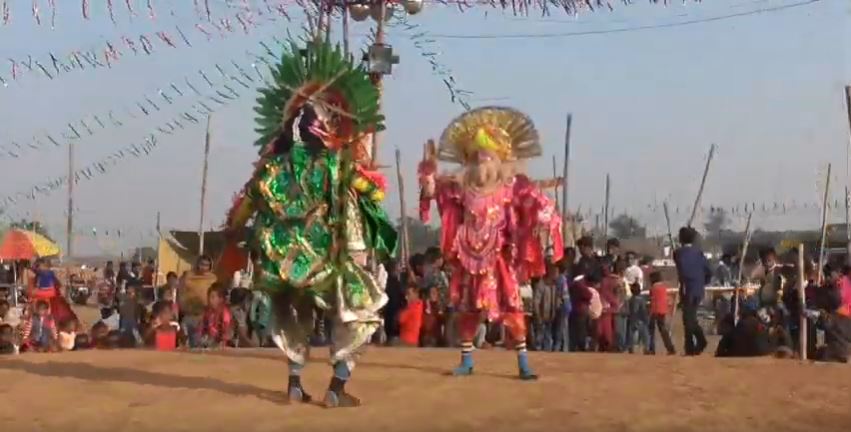
Raktabija was a powerful demon, the commander of Shumbha Nishumbha. He was strong and much powerful due to the boon that whenever drop of his blood fell on the ground thousands of Raktabijas will be born. Raktabija disenfranchised all Gods from heaven. When Gods approached Bramha, Bishnu, Maheswar ,a powerful mighty woman, Mahakali, was created […] read more